
Many people assume a filling is the standard fix for a damaged tooth. Sometimes it is. But when a tooth is weak, cracked, or has lost too much structure, a filling can be like patching a cracked windshield: it may hold briefly, then fail when you bite down.
This guide is designed for patients comparing options for crowns in Sacramento and trying to answer one question before they commit: do I actually need a crown, or is there a simpler alternative?
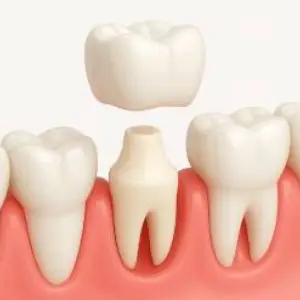
A crown is usually recommended when a tooth needs reinforcement, not just a repair. If you have chewing pain, a cracked cusp, or a large filling that keeps breaking, an exam can confirm whether a crown is the safer long-term choice.
Below are common problem-based reasons patients are referred for crowns. These are not diagnoses, but they are strong signals that you should schedule an evaluation with a general dentist.
Pain or a sharp zing with pressure can happen when a tooth is cracked, when a large filling is flexing, or when a restoration is not sealing well anymore. A crown may be recommended to stabilize the tooth and protect it from further fracture.
Fillings rely on the remaining tooth to hold them in place. When a filling is very large, the tooth walls can become thin and brittle. In our experience, the teeth most likely to need crowns are the ones that have had multiple repairs in the same spot over time.
A visible crack or missing cusp does not always mean a crown is required, but it raises the stakes. If the crack is deep or the tooth is structurally compromised, full coverage can help prevent the fracture from spreading into an area that makes the tooth harder (or impossible) to save.
After a root canal, the tooth can be more vulnerable to fracture, especially in the back of the mouth where chewing forces are higher. Depending on the tooth and remaining structure, a crown is often recommended as a protective cap.
If you are also dealing with lingering sensitivity or chewing pain, your dentist may coordinate evaluation with the tooth's nerve health and prior treatment history. For background, you can review our page on non-surgical root canal treatment.
Sensitivity can come from many causes, including gum recession, cavities, or a restoration that is leaking. When sensitivity is tied to a heavily restored tooth, a crown may be considered to seal and protect the tooth (or to support other treatment if the nerve is involved).
If your bite feels high, uneven, or you keep hitting one tooth first, you can end up with pain and micro-cracks over time. Sometimes the solution is simply adjusting the bite. Other times, if the tooth has been weakened, your dentist may discuss a crown to restore stable function.
Discoloration can point to internal changes in the tooth, while wear and flattening can indicate grinding and heavy bite forces. Crowns can rebuild shape and strength when needed, and they are sometimes planned alongside cosmetic goals.
If you are exploring broader smile improvements at the same time, our cosmetic dentistry services page can help you compare options.
A good exam focuses on the root cause, not just the symptom. During a crown consult, a general dentist typically evaluates:
Not every damaged tooth needs a crown. Depending on the situation, your dentist may recommend an option that preserves more natural tooth structure.
If you are unsure whether a crown is truly necessary, ask your dentist to walk you through the why. Clear answers help you feel confident in the plan.
For a deeper overview of what crowns are and the types available, our related service page on dental crowns explains the basics.
If you are looking for ongoing dental care in a single office, you can also review our general dentistry in Sacramento page.
A filling works best when there is enough healthy tooth structure left to support it. A crown is more likely when a tooth is cracked, has a very large or repeatedly failing filling, has had a root canal, or hurts with chewing pressure. An exam and X-rays help determine whether the tooth needs reinforcement with a crown or can be treated more conservatively.
Most patients tolerate crown treatment well with local anesthetic. You may feel pressure during the visit and mild soreness afterward. If you have significant pain, swelling, or a bite that feels high after placement, contact your dental office so adjustments can be made.
Often, yes, especially for back teeth that take heavy chewing forces. Teeth can be more prone to fracture after a root canal, and a crown can help protect the remaining tooth structure. Your dentist will recommend the best option based on which tooth it is and how much structure is left.
Sometimes. Minor chips or superficial cracks may be managed with smoothing, bonding, or a filling, depending on location and bite forces. Deeper cracks, cracks that cause biting pain, or cracks that weaken a cusp often need the full coverage and reinforcement of a crown.
Waiting can allow a crack to spread, a large filling to fracture, or decay to progress around an old restoration. That can reduce the chance of saving the tooth or may change the treatment needed. If you have new chewing pain or a piece of tooth breaks off, it is worth getting evaluated soon.
Crown longevity varies based on bite forces, clenching or grinding, oral hygiene, and how much healthy tooth structure supports it. Regular checkups, good home care, and addressing grinding with a nightguard when recommended can help a crown last longer.
If you are dealing with chewing pain, a cracked cusp, or a filling that keeps failing, it is not just annoying. It can be a sign that the tooth needs reinforcement. A crown is not always the answer, but when it is, it is usually because it helps prevent the next problem, not just fix the current one.
If you want a clear recommendation (and to understand your options), our team at Global Smiles Sacramento can help. Call 916-487-5147 to schedule a visit.
Clinical observation from our team: we often see patients come in after a tooth "just started hurting when chewing" and find the issue is a crack around an older, larger filling. Catching it early can expand your treatment options.
Patient Testimonials
Beautiful office, friendly staff, terrific dental care.
by Trevor Derrett
Had a great visit today and got to know the people that work there. They made me feel comfortable as the change of ownership is taking place.
by Bonnie Schrader
I am so impressed with the entire experience. From the friendly reminders, to entering the office, and especially the dentist! My previous dentist Stephen C Ott, DDS, was incredible. I had the benefits of his gift since 1971. I was worried about finding a new dentist. However, I was blessed to have Dr. Ott recommend his dentist: Dr. Lillian Stojic. I recommend her to all!!!
by John Murphy III
I've been seeing dr stojic since I moved to town 18 years ago, my whole family has transitioned over there and I love the whole team! Keep up the great work!
by Carrie Carsell
Dr. Lilliana and her staff make getting teeth cleaned and a cavity filled as good an experience as possible. They get the job done with minimal pain and discomfort.
by Age Advantage S.
I just had a visit to Dr. Stojic's office. My ten year old daughter had an infected tooth that had to be extracted. She was so nervous and scared at the possibility of an extraction. When we arrived we were greeted warmly by her office manager and then by her equally kind assistant who brought us back to her room...
by Kristi L.
Dr. Lilliana and her staff are not only effective and efficient, but they also remove my anxiety. When I had to have a root canal, I was nervous about the pain. I was given the choice of Nitrous oxide gas and that calmed me.
by Gail M.
Dr. Stojic saw two of my children. The youngest was so comforted by her easygoing and confident demeanor that he was the quietest and most still 4 year old I've seen in a dentist chair! Our older son was very afraid of the dentist and has been to a couple other dentists who were unable to treat him because of his scared behavior. Dr. Stojic was very patient and helped him understand what she was doing at every step, which calmed him down so she was able to fill his cavities and even extract a tooth. We were thoroughly impressed with Dr. Stojic and her office and staff.
by Brittani B.
Schedule Your Appointment
Global Smiles Sacramento – Dr. Lilliana Stojic DDS, MAGD
Cosmetic & Family Dentistry
1801 Professional Drive | Sacramento, CA 95825
Phone: 916-487-5147 | Fax: 916-626-4944