

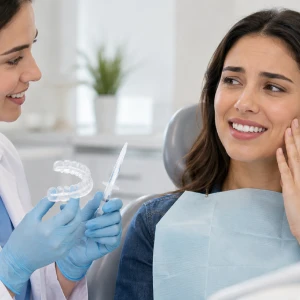
If you have ever wanted a brighter smile but hesitated because you have heard whitening can hurt, you are not alone. Sensitivity is the #1 reason people postpone a cosmetic upgrade, even when the discoloration is bothering them.
This guide explains what actually causes sensitivity during teeth whitening in Sacramento, which factors make it more likely, and what a safer plan can look like if you already have a history of sensitive teeth.
In our previous blog, "Keep Your Whitening Results Longer in Sacramento," we discussed how to protect your shade after whitening. In this article, we focus on preventing the discomfort that can stop you from whitening in the first place.
Whitening sensitivity is common, but it is also predictable and often preventable. The key is choosing the right method and pacing it based on your teeth, not on a one-size-fits-all timeline.
Most professional whitening and reputable at-home whitening works by using peroxide-based ingredients to break up stain molecules. Those ingredients can temporarily travel through tiny pathways in enamel and dentin and irritate the tooth's nerve. That irritation is what you feel as cold sensitivity or "zings."
Patients often assume sensitivity means enamel is being stripped away. In reality, the more common mechanism is temporary nerve response. That is also why sensitivity tends to fade when you pause whitening.
Higher concentration and longer exposure increase the chance that whitening ingredients reach the nerve. If you are prone to sensitivity, a slower plan with shorter sessions can be more comfortable while still producing noticeable improvement.
Gum irritation is sometimes mistaken for tooth sensitivity. Ill-fitting strips or overfilled trays can push gel onto the gums, causing burning or temporary whitening of the tissue. That is one reason dentist-supervised approaches, including custom trays, can be helpful for sensitive patients.
Here is an experience-based pattern our team sees: when patients begin whitening while they have inflamed gums, untreated decay, or a rough edge on a filling, whitening feels much harsher than it should. A quick check can identify whether sensitivity is coming from whitening itself or from an underlying dental issue that needs treatment first.
If your goal is a brighter smile without days of discomfort, plan ahead. These are the practical steps that make the biggest difference for most patients.
Page-one competitors for Teeth Whitening Sacramento often list "in-office vs at-home" options, but the key question for sensitive patients is different: which option can be adjusted in strength, fit, and schedule for your specific mouth?
In-office whitening can deliver a big change quickly, which many patients love. If you have a sensitivity history, ask about pacing, rest breaks, and desensitizing steps during treatment.
A take-home plan can be easier to customize: shorter wear times, fewer consecutive days, and adjustments that match your tolerance. For an overview of options, visit our teeth whitening in Sacramento service page.
Many OTC products work, but they are designed for the average user. If your teeth are already sensitive, "one size fits all" may feel too intense. If you are unsure, it is safer to ask a dentist first rather than pushing through pain.
Mild sensitivity can be normal. These red flags mean you should pause whitening and schedule an exam:
If you want to explore smile improvements beyond whitening, our cosmetic dentistry options page can help you compare alternatives.
Not usually. Most whitening sensitivity is temporary nerve irritation (in the dentin and tooth pulp) caused by whitening ingredients moving through microscopic channels. It typically resolves when whitening is paused and desensitizing steps are used.
Sharp, short zings often happen when the tooth's nerve reacts to temperature changes after whitening. Higher peroxide levels, longer wear time, dehydration of the tooth surface, and pre-existing recession or micro-cracks can increase those sensations.
Often, yes, but the safest plan is a customized one: confirm there is no active decay or gum disease, choose a lower-strength or slower approach, add desensitizing agents, and build in rest days. A dental exam helps rule out causes of sensitivity that whitening will not fix.
Many sensitive patients do best with dentist-guided take-home whitening that uses custom trays and a paced schedule. The best option depends on your teeth, gumline, existing restorations, and how quickly you want results.
Many people feel sensitivity for 24 to 48 hours, but it can vary. If discomfort is strong, lasts more than a few days, or is localized to one tooth, you should schedule an exam because a cracked tooth or cavity may be involved.
Yes. Gum irritation can happen if gel contacts the tissue or if trays/strips fit poorly. Stop whitening, rinse thoroughly, and contact your dentist. Adjusting the technique (or switching to custom trays) usually prevents repeat irritation.
Whitening sensitivity is real, but it is not random. When you understand what triggers it and choose a plan that matches your teeth, most patients can whiten comfortably and confidently.
If you are comparing options for Teeth Whitening Sacramento searches and you know you are sensitive, schedule a visit with Dr. Lilliana Stojic and our team so we can help you choose a safer approach.
Ready for a brighter smile with fewer surprises? Call 916-487-5147 to talk through sensitivity history and the best whitening plan for you.
Prefer to start with a full oral health check first? You can also visit our contact page to request an appointment.
Patient Testimonials
Beautiful office, friendly staff, terrific dental care.
by Trevor Derrett
Had a great visit today and got to know the people that work there. They made me feel comfortable as the change of ownership is taking place.
by Bonnie Schrader
I am so impressed with the entire experience. From the friendly reminders, to entering the office, and especially the dentist! My previous dentist Stephen C Ott, DDS, was incredible. I had the benefits of his gift since 1971. I was worried about finding a new dentist. However, I was blessed to have Dr. Ott recommend his dentist: Dr. Lillian Stojic. I recommend her to all!!!
by John Murphy III
I've been seeing dr stojic since I moved to town 18 years ago, my whole family has transitioned over there and I love the whole team! Keep up the great work!
by Carrie Carsell
Dr. Lilliana and her staff make getting teeth cleaned and a cavity filled as good an experience as possible. They get the job done with minimal pain and discomfort.
by Age Advantage S.
I just had a visit to Dr. Stojic's office. My ten year old daughter had an infected tooth that had to be extracted. She was so nervous and scared at the possibility of an extraction. When we arrived we were greeted warmly by her office manager and then by her equally kind assistant who brought us back to her room...
by Kristi L.
Dr. Lilliana and her staff are not only effective and efficient, but they also remove my anxiety. When I had to have a root canal, I was nervous about the pain. I was given the choice of Nitrous oxide gas and that calmed me.
by Gail M.
Dr. Stojic saw two of my children. The youngest was so comforted by her easygoing and confident demeanor that he was the quietest and most still 4 year old I've seen in a dentist chair! Our older son was very afraid of the dentist and has been to a couple other dentists who were unable to treat him because of his scared behavior. Dr. Stojic was very patient and helped him understand what she was doing at every step, which calmed him down so she was able to fill his cavities and even extract a tooth. We were thoroughly impressed with Dr. Stojic and her office and staff.
by Brittani B.
Schedule Your Appointment
Global Smiles Sacramento – Dr. Lilliana Stojic DDS, MAGD
Cosmetic & Family Dentistry
1801 Professional Drive | Sacramento, CA 95825
Phone: 916-487-5147 | Fax: 916-626-4944